
Boosting Your Child’s Speech Development with a Toy Rotation System
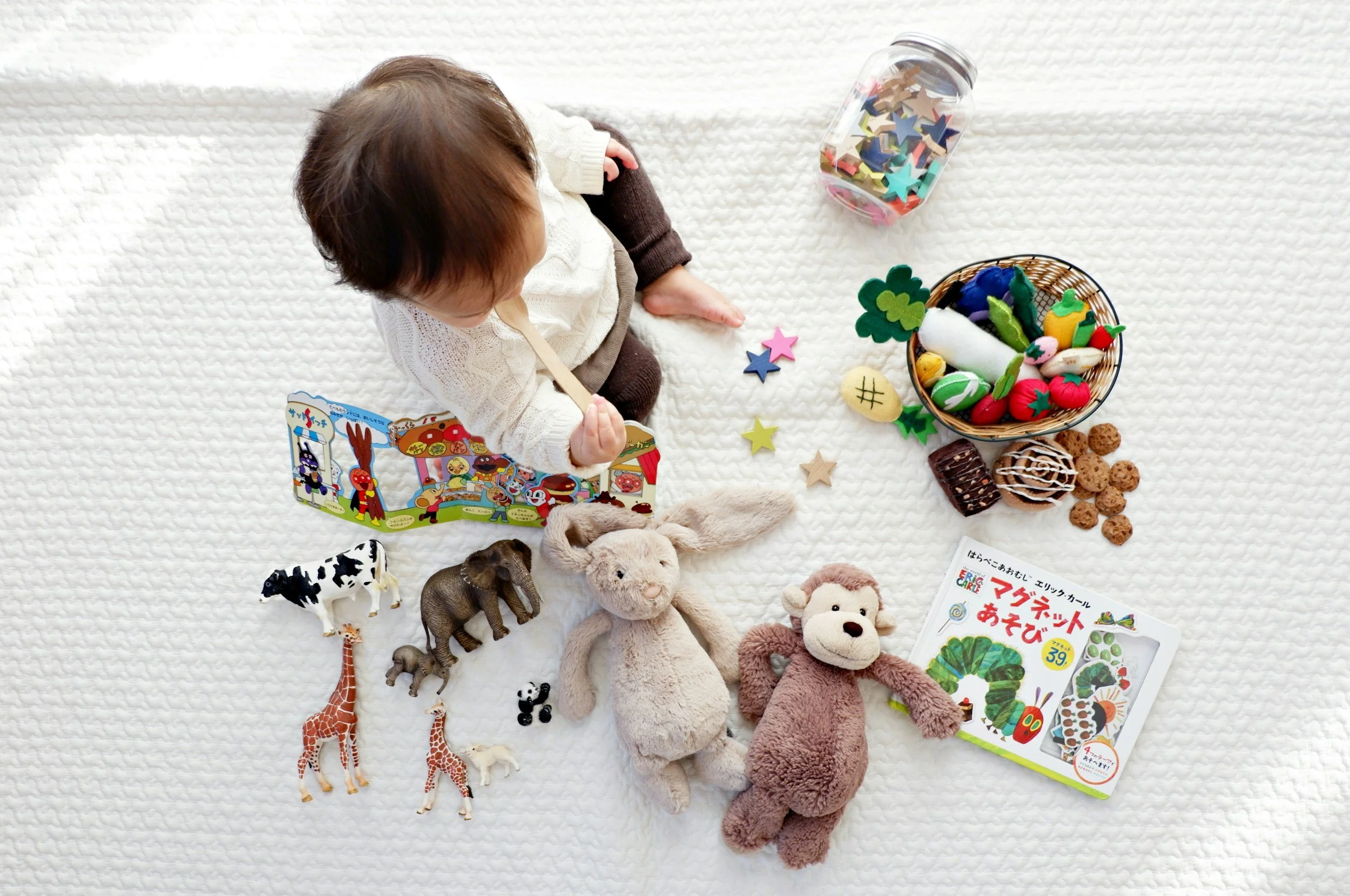
As a speech-language pathologist, I often get questions about how to create an engaging, language-rich environment for young children. One of my favorite strategies to recommend is the toy rotation system. Not only does it keep playtime exciting, but it also supports your child’s speech and language development in fantastic ways.
What is a Toy Rotation System?
A toy rotation system involves organizing your child’s toys and regularly swapping out the toys that are available for play. Instead of having all their toys out at once, you divide them into groups and only have one group accessible at a time. Every week or two, you rotate the toys, bringing out a new set and putting the old ones away.
Why Use a Toy Rotation System?
Reduces Overwhelm: When children are surrounded by too many toys, it can be overwhelming and distracting. A smaller, curated selection allows them to focus better and play more creatively.
Encourages Deep Play: With fewer toys, children tend to play longer and more thoughtfully with each one. This deeper engagement can lead to more meaningful interactions and opportunities for language use.
Increases Appreciation: Rotating toys makes each set feel new and exciting again. This novelty can spark renewed interest and more enthusiastic play sessions.
How Does This Help with Speech Development?
Enhanced Vocabulary: By rotating toys, you introduce a variety of themes and objects over time. Each set of toys can come with its own set of vocabulary words. For instance, one week might be all about farm animals, while the next features construction vehicles. This variety helps broaden your child’s vocabulary in a natural, context-rich way.
Improved Focus on Communication: With fewer toys available, children often engage more with the toys at hand. This focused play encourages more communication, whether it’s describing what they’re doing, asking for help, or telling stories about their play scenarios.
Stimulates Imagination and Narrative Skills: Rotating toys often sparks new ideas and imaginative play. As children create new stories and scenarios with their toys, they practice narrative skills, which are crucial for both language development and later academic success.
Setting Up Your Toy Rotation System
Sort and Categorize: Gather all your child’s toys and sort them into categories (e.g., vehicles, animals, building blocks, dolls, puzzles). Create several groups of toys that include a mix of categories.
Store and Rotate: Store each group of toys in separate bins or boxes. Keep one group accessible and store the rest out of sight. Every one or two weeks, swap the current set with a new one.
Observe and Adapt: Pay attention to which toys your child enjoys the most and how they interact with each set. You can adjust the rotation schedule or the contents of each group based on their interests and developmental needs.
Tips for Maximizing Language Opportunities
Play Together: Spend time playing with your child and model language use. Describe what you’re doing, ask questions, and encourage your child to narrate their play.
Introduce New Words: Use the toy rotation to introduce new vocabulary. For example, when you bring out the farm animal toys, talk about the sounds they make, where they live, and what they eat.
Create Stories: Encourage your child to create stories with their toys. Prompt them with open-ended questions like, “What happens next?” or “Who is this character?”
Final Thoughts
A toy rotation system is a simple yet powerful tool to enhance your child’s playtime and support their speech and language development. By keeping playtime fresh and engaging, you’re providing them with rich opportunities to learn and grow.
As always, if you have any concerns about your child’s speech and language development, don’t hesitate to reach out to a speech-language pathologist. We’re here to support you and your child on this exciting journey. Happy playing!